

Ethos
In our culture of mass consumption, when objects stop being useful they’re typically thrown away—and, in the UK, that means millions of pieces of furniture end up in landfill every year.
No staples—it’s a Jott staple
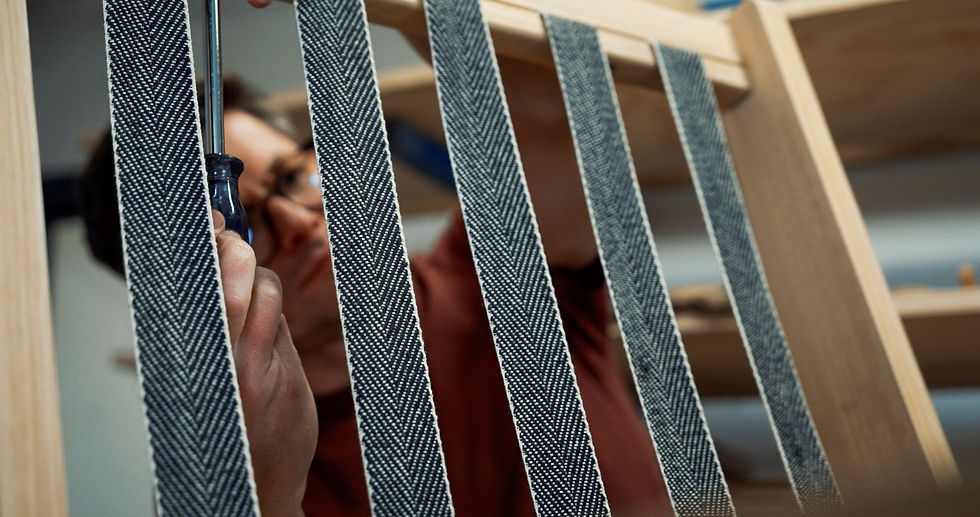
Most furniture relies on staples to attach fabric to frame, which can complicate and raise the cost of repairs, reupholstering, and recycling. Consequently, items with staples are more likely to end up in landfill.
We have a zero staples policy—which means it’s easier and more affordable to repair, reupholster, and recycle our furniture.
Instead of issuing our furniture a one-way ticket to landfill, we make sure every component can be reborn as usable, raw materials.
.jpg)

Natural materials
Natural, locally sourced materials don’t just have a smaller carbon footprint; they also prompt more meaningful connections between body and object. Natural materials are reassuring, warm to touch, replete with life-giving elements. Unique finishes and patterns, grains and textures, symmetries and irregularities—they break through the ubiquity of the urban, sensuously rewilding our home and work environments.
All our furniture is crafted from durable, responsibly sourced timber, grown within a 140-mile radius of our FSC- and PEFC-accredited wood mills. All told, our furniture travels less than 200 miles before reaching your door—so you know you’re making the sustainable choice.

Natural, locally sourced materials
Furniture repair and part replacement scheme
Just 1 in 10 people attempt to repair or restore broken items, creating a throwaway, fast-furniture culture, where cheaply made, mass-produced pieces are designed with a short life cycle for quicker product turnover.
With every Jott design, we include a durable, fit-for-purpose timber frame—the backbone of your piece for many years to come—and, as your item ages, we’ll help with the repair and refurbishment of worn cushions, cases, and springs through our furniture repair and part replacement scheme.
Not only does this reduce your carbon footprint, it also extends the lifespan of your furniture and contributes to a more circular economy.

.jpg)
Zero-to-landfill
To reduce waste further, we use recycled fabrics where possible and always recycled cardboard packaging—no plastic, no foam; and that means no waste to landfill.
We’re also working closely with our suppliers to eliminate harmful chemicals from our glues and stains, and we’ll continue to innovate sustainably, developing recyclable and compostable natural cushions for our collection.
Working across bespoke, residential, and commercial projects, all our products are built on sustainable principles and practices, from the local sourcing of materials to traditional craftsmanship techniques that encourage repair over replacement.


Journal